
Quick answer
Prefilled veterinary syringes can be a practical package format for gel, paste and selected liquid animal-health products when the dose, product behaviour, syringe components, closure and intended administration method have been confirmed together. Their main value is a prepared dose presentation that can simplify handling and reduce preparation steps for the user.
The package should not be selected from syringe capacity alone. Before approval, confirm the product's viscosity and sensitivity, target fill volume, barrel and plunger compatibility, tip or outlet design, closure method, storage conditions, labelling needs and the filling process used for commercial production. The packaging supplier can provide component data and samples; the product owner remains responsible for product-specific compatibility, stability, quality and market requirements.
For the equipment side of the project, review the intramammary syringe filling line and the veterinary intramammary syringe filling application only after the package and product brief is clear.
What is a prefilled veterinary syringe?
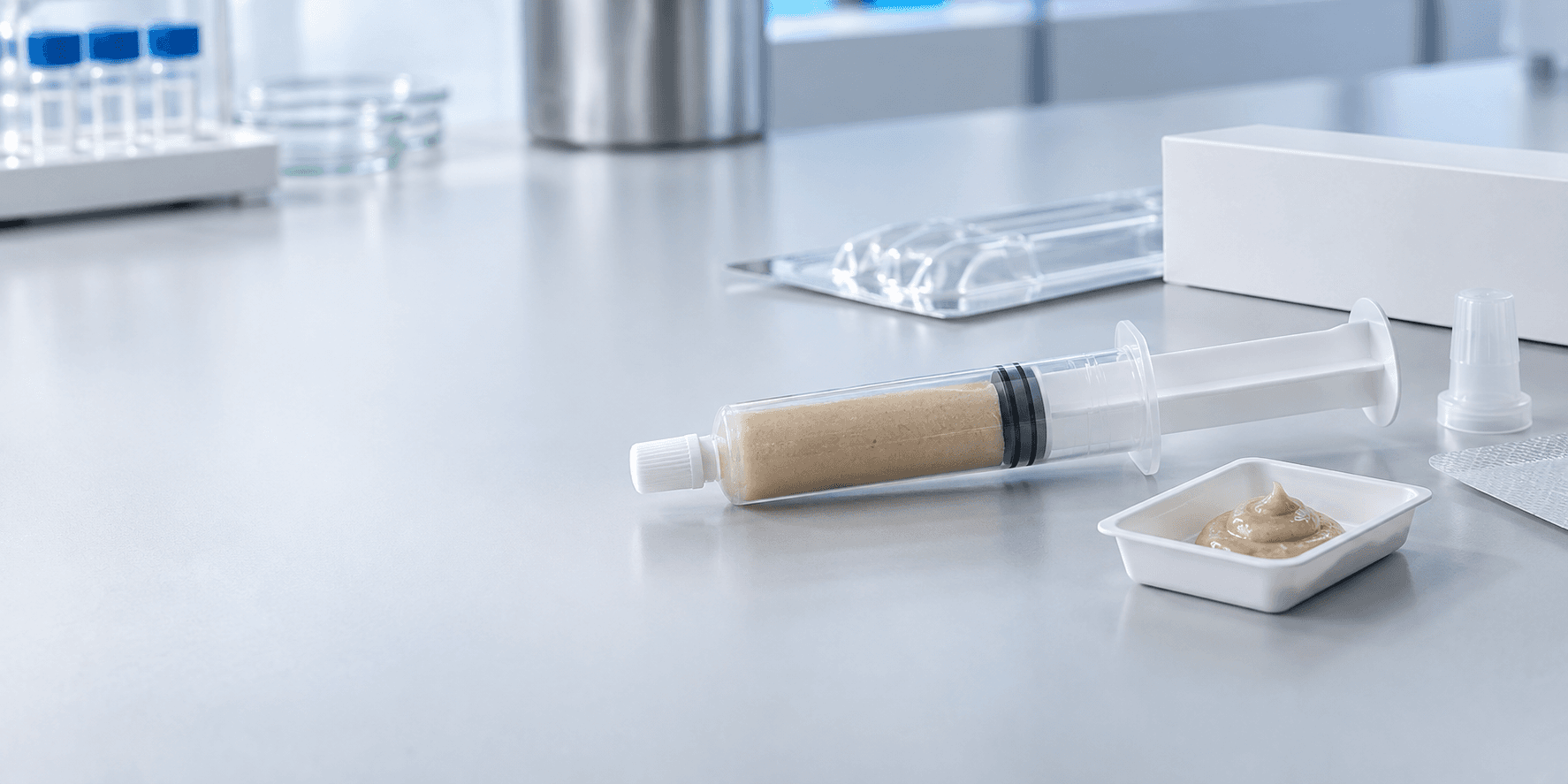
A prefilled veterinary syringe is a syringe supplied with a defined quantity of an animal-health product before it reaches the point of use. Depending on the product and administration route, the syringe may be used for a gel, paste, liquid or another dosage presentation. “Prefilled” describes the package and filling state. It does not by itself confirm that the product is sterile, injectable, single-dose, multi-dose or suitable for a particular animal.
For veterinary products, the same broad syringe format may serve very different applications. A paste for an equine product can require different capacity and outlet considerations from a gel used for a pet product. An intramammary product can require a different tip, protective closure or handling sequence from an oral dosing syringe. The product, package and use instructions therefore need to be reviewed as one system.
Why animal-health companies consider this format
The dose presentation is defined before use
A prepared syringe can present a defined nominal quantity to the user. That may simplify the relationship between the product label, the syringe scale or fill volume and the intended administration instruction.
The practical benefit depends on the product and package design. A nominal syringe capacity is not the same as a validated delivered dose. Buyers should define target fill, usable volume, residual product and any required dose markings before approving the format.
Gel and paste products can be supplied in a ready-to-use format
Veterinary gels and pastes can be inconvenient to transfer or measure at the point of use. A prefilled syringe may provide a more controlled presentation for products that need to be dispensed through a narrow outlet or applied in a defined quantity.
This is a packaging decision, not a universal claim about product performance. Thick products still need evaluation of extrusion force, plunger movement, air entrapment, stringing, residue and closure integrity. The results depend on the formulation, temperature, component design and process sequence.
The package can support product-specific handling instructions
The syringe, plunger, tip, cap and label can be designed around the intended animal, product and administration method. An equine paste, a pet medicine gel and an intramammary product may therefore require different handling explanations and closure arrangements.
The label and instructions should make the package format clear. If the syringe is not intended for injection, the language and visual presentation should not imply an injectable use.
The format may simplify a multi-step preparation process
Where the alternative requires a user to transfer product, measure a dose or assemble several components, a prefilled format may reduce preparation steps. Whether that improves the user experience depends on the product, syringe, closure, storage and environment in which the product is used.
The reduction in preparation steps should be evaluated together with manufacturing, packaging, transport and storage requirements. A format that is convenient at the point of use may introduce new requirements for filling, plunger insertion, tip protection or change control.
The package can support differentiated product presentations
Animal-health brands may use different capacities, labels, colours or secondary packaging formats for different products or animal groups. The package can therefore be part of the product presentation rather than only a container.
Any differentiation should remain controlled. Changes to the syringe, plunger, closure, material, supplier or filling configuration may require a documented review before commercial production continues.
Where prefilled veterinary syringes have limits
Product compatibility cannot be judged by appearance
A product may look acceptable in a syringe during a short sample review but behave differently during storage, transport or repeated dispensing. Compatibility work may need to consider the formulation, contact materials, closure, temperature, time and intended use.
The packaging supplier can provide component specifications, samples and available quality information. The product owner or its authorised testing partners must establish the product-specific compatibility and stability evidence required for the project.
High-viscosity products need a realistic dispensing review
Gels and pastes can create higher resistance to movement than low-viscosity liquids. The review should consider filling behaviour, air removal, plunger insertion, initial movement, continuous dispensing, stringing and residual product.
A manual bench test may not represent the commercial process. If the product is intended for commercial prefilled production, test the selected syringe and closure arrangement using representative material and a documented process sequence.
A larger nominal capacity does not automatically improve dosing
Capacity should follow the intended fill and use case. A larger syringe can change handling, dead volume, material use, label area and the force needed to dispense a thick product. A smaller syringe may limit the target fill or require a different closure design.
Select capacity from target dose, fill tolerance, usable volume, product behaviour and user instructions rather than from catalogue volume alone.
Single-dose and multi-dose formats have different controls
A single-dose format and a multi-dose format should not be treated as interchangeable. They may differ in closure design, labelling, user instructions, dose control, after-opening handling and change-control requirements.
The project team should state whether the package is intended for one administration, several administrations or a controlled quantity dispensed over time. The final choice should be tied to the product and approved use instructions.
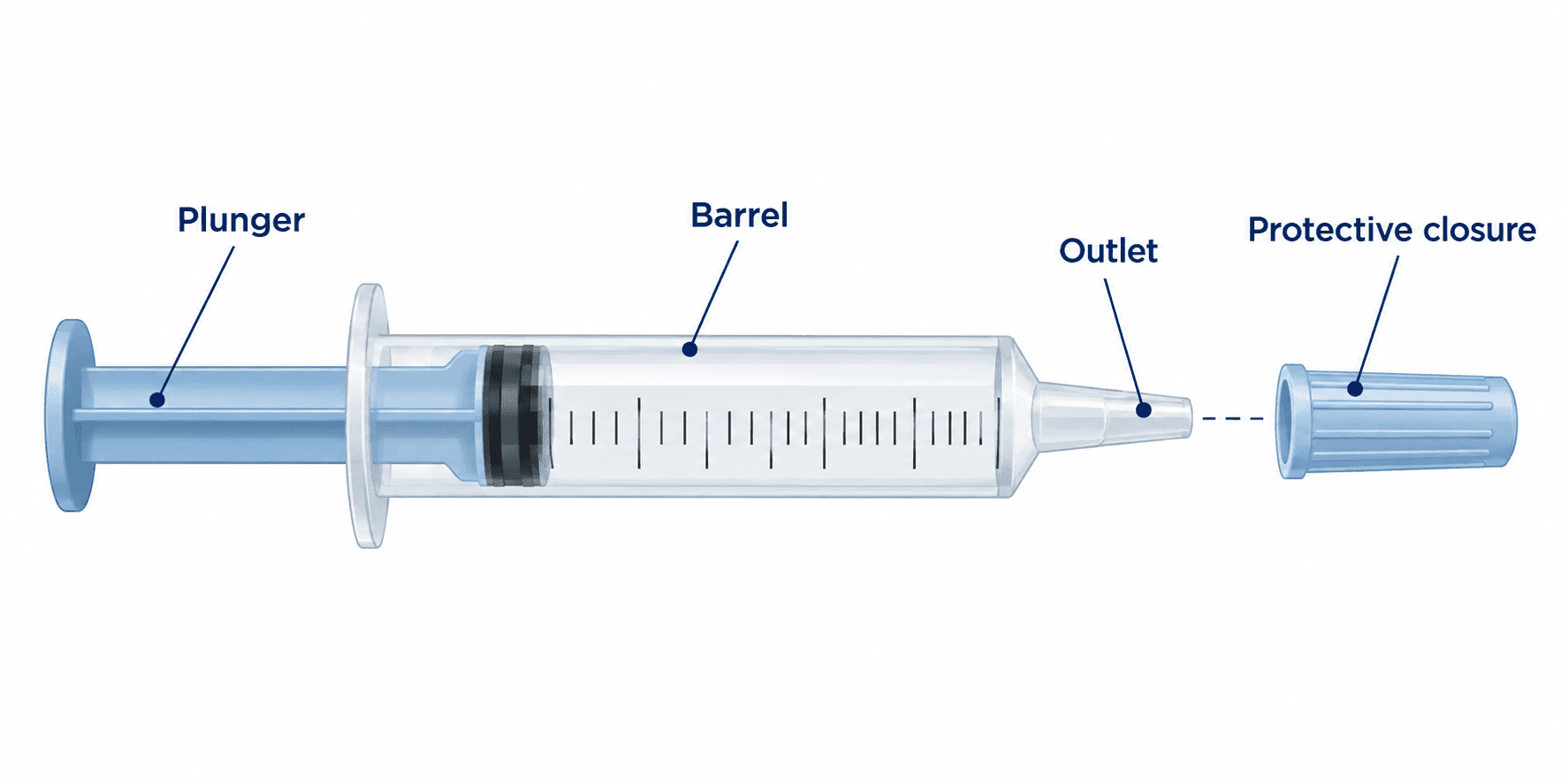
*The barrel, plunger, outlet and protective closure should be reviewed as one package system.*
Prefilled veterinary syringe selection checklist
| Selection area | Questions to confirm before sample approval |
|---|---|
| Product | Is the product a gel, paste, liquid or another formulation? Does it contain suspended particles or fibres? |
| Use | Is the product oral, topical, intramammary or another non-injectable administration format? What animal or user group is intended? |
| Fill volume | What is the nominal fill? What is the usable volume and acceptable fill variation? |
| Syringe body | What are the barrel material, internal geometry, graduation and label-area requirements? |
| Plunger | Is the plunger compatible with the product and required dispensing force? |
| Tip or outlet | What outlet, nozzle, applicator or tip format is required? Does it need a protective cap? |
| Closure | How is the filled syringe closed and protected during storage and transport? |
| Product behaviour | Does the product string, settle, separate, harden or trap air during filling or dispensing? |
| Storage | What temperature, light and orientation conditions need to be evaluated? |
| Labelling | What information must be printed on the syringe, carton or label? |
| Testing | What sample quantity, product batch, storage condition and acceptance criteria will be used? |
| Production | Will the format be filled manually, semi-automatically or on an automatic line? |
How gel and paste products change the package decision
Gel products
Gels may show shear-thinning, yield-stress or temperature-dependent behaviour. Evaluate the syringe at temperatures and time conditions relevant to filling, storage and use. The review should include plunger movement, outlet flow, residue and the risk of air pockets.
Paste products
Pastes may require a wider outlet, a different plunger design or a different filling sequence from low-viscosity liquids. Record whether the paste contains particles, strings during withdrawal or changes consistency between the beginning and end of a filling run.
Product changes
If the formula, supplier, material, syringe geometry, plunger, closure or sterilization state changes, the approved package system may have changed. Define change triggers before commercial scale-up so the team knows when a new sample review or qualification decision is required.
What to send when requesting a proposal
Prepare the following information:
- Product name or product category.
- Product form: gel, paste, liquid or another format.
- Intended animal and administration route.
- Target fill volume and acceptable fill variation.
- Product viscosity or a practical description of its flow behaviour.
- Required syringe capacity, if already defined.
- Plunger, tip, nozzle and closure requirements.
- Target annual or batch quantity.
- Storage and transport conditions to be evaluated.
- Destination market and required documentation.
- Available product and syringe samples.
- Whether the project needs a single machine, semi-automatic equipment or a complete production line.
This information allows the packaging and equipment teams to discuss the same configuration. It also reduces the risk of selecting a syringe based only on nominal volume or a catalogue photograph.
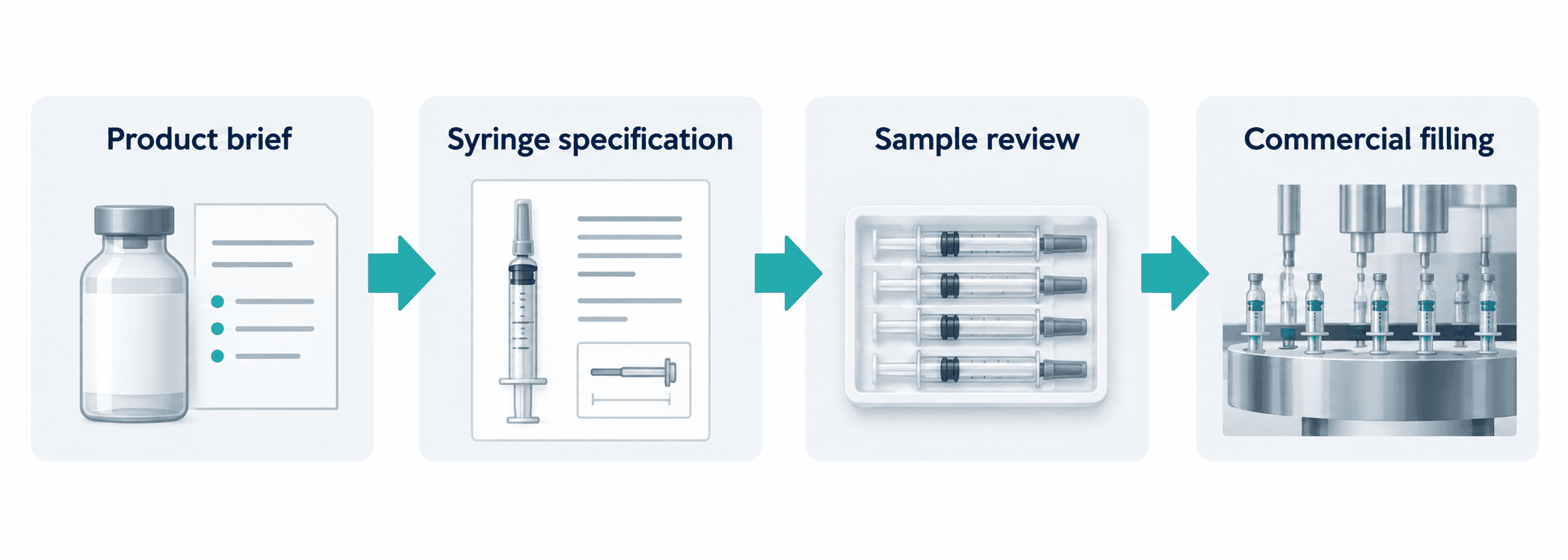
*A practical project sequence moves from the product brief to syringe specification, sample review and commercial filling discussion.*
When to involve a filling-equipment supplier
Involve the filling-equipment supplier before the syringe format is locked if the project will move to commercial production. The supplier should review the selected syringe, product behaviour, target fill and closure sequence against the proposed process.
For a gel or paste project, the discussion may include product feeding, dosing, nozzle movement, air management, plunger insertion, cap or tip placement, changeover, cleaning and sample testing. The appropriate configuration depends on the product and syringe format. It should be confirmed through technical review and, where applicable, representative samples.
King Pack can discuss veterinary syringe and prefilled-syringe filling projects based on the customer's product, syringe specifications, target output and documentation needs. The recommended equipment arrangement should be confirmed for the specific product and package rather than assumed from a general syringe category. For a project-specific review, send the product and package brief through the contact page.
The broad equipment context remains on the main site, where buyers can review veterinary filling and packaging equipment after the product and package requirements are defined.
Frequently asked questions
Are prefilled veterinary syringes only used for injectable medicines?
No. A prefilled syringe is a package and dosage presentation. It may be used for different veterinary products and administration routes. The intended use must be stated clearly, and the package must not imply injection when the product is intended for oral, topical or intramammary use.
Are gel and paste products suitable for prefilled syringes?
They can be, but suitability depends on flow behaviour, particles, storage conditions, syringe geometry, plunger and outlet. Representative product and package testing is needed before approval.
Is a larger syringe better for a thick veterinary paste?
Not necessarily. Capacity, outlet geometry, plunger design, fill volume and dispensing force should be evaluated together. A larger format may improve usable volume in one project but create handling or label-area trade-offs in another.
What is the difference between a single-dose and a multi-dose veterinary syringe?
The formats support different use patterns and may require different closure, labelling and handling controls. The choice should follow the product instructions and intended administration process.
Can a packaging supplier confirm final product compatibility?
A packaging supplier can provide component specifications, samples and available quality information. The product owner or authorised testing partner must establish product-specific compatibility, stability and market requirements.
Should the syringe be tested on the commercial filling process?
If the product will be commercially prefilled, testing should represent the planned production sequence as closely as practical. This can reveal issues that a manual fill or visual sample inspection may not show.
Conclusion
Prefilled veterinary syringes can support practical dose presentation for gel, paste and selected animal-health products. The strongest projects treat the product, syringe, plunger, closure, storage and filling process as one package system.
Before choosing a format, define product behaviour, intended use, target fill, syringe components, testing plan and commercial production needs. Then submit the product and syringe specifications for technical review. A well-defined package brief gives both the packaging supplier and filling-equipment supplier the information needed to evaluate the project together.