
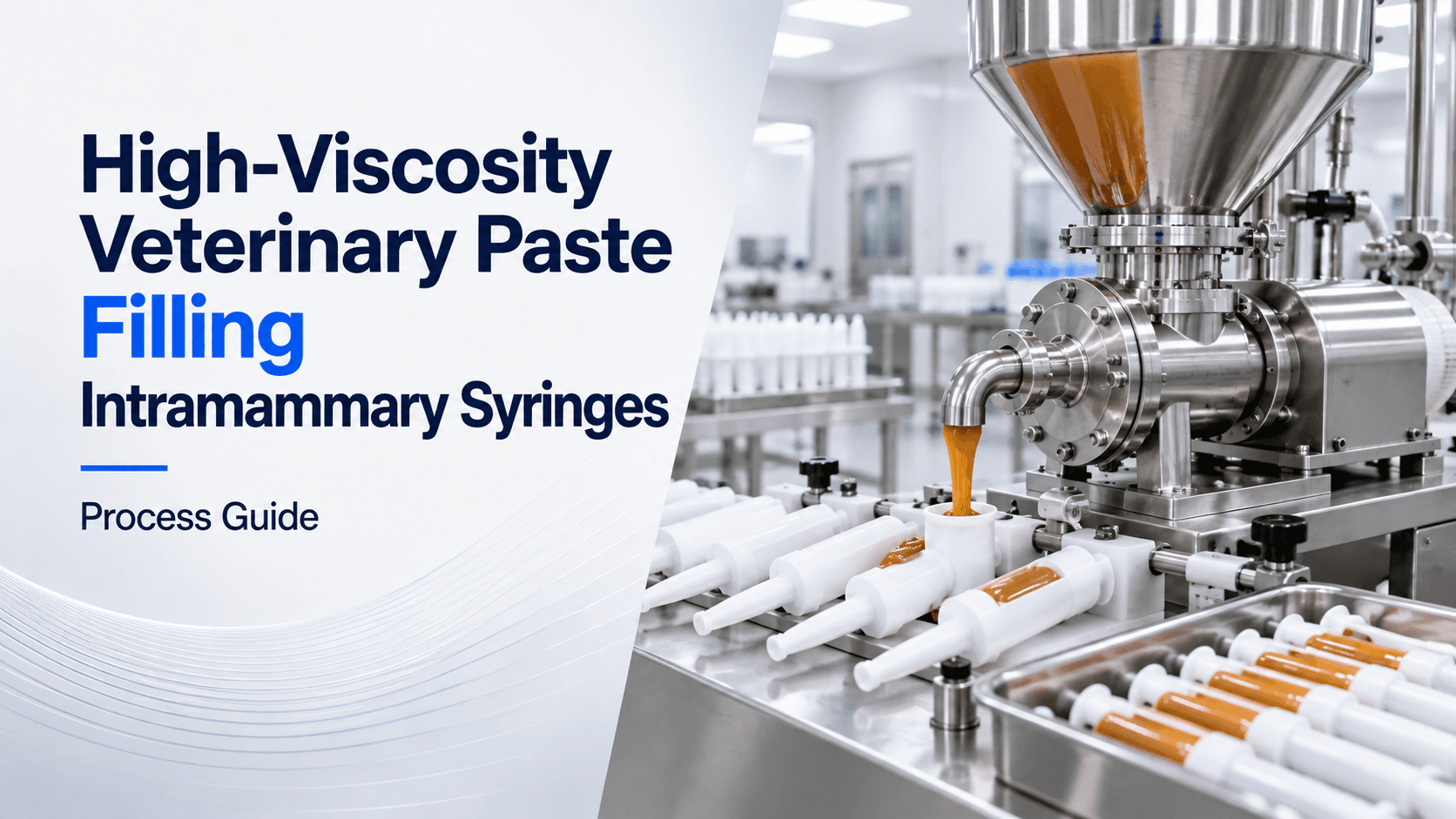
Quick answer
Select a paste-filling hopper by product behaviour, required product level, refill method, agitation needs, air sensitivity, cleaning scope, material compatibility and the connection to the dosing system. A hopper should support stable product delivery without creating unnecessary shear, air entrainment, dead zones or difficult product recovery.
The correct hopper is therefore a process decision. Share the formulation, temperature range, batch size, target output, solids or particles, cleaning method and syringe format before comparing hopper drawings or asking for a price.
Why hopper design matters in syringe filling
The hopper is the interface between product preparation or transfer and the dosing system. It can influence the pressure available to the pump, how quickly a product settles, how air is released, how often operators refill the system and how much product remains after a batch. Those effects are especially important for veterinary creams, gels, pastes and suspensions.
The keyword paste filling machine hopper design often hides several buyer questions:
- Does the product need agitation or only a stable buffer?
- Can the hopper be refilled without interrupting the filling sequence?
- Will the hopper introduce air or disturb a suspension?
- How will the product-contact surfaces be cleaned and inspected?
- Can the hopper connect to the required syringe filling and capping scope?
*Hopper design should be reviewed with the actual veterinary paste and filling route.*
The first decision: buffer hopper, active feed or controlled vessel
Not every project needs the same type of product vessel. A simple buffer hopper may be appropriate when the product is already uniform and flows predictably. A hopper with gentle agitation may be needed when the product settles or requires controlled movement. A larger or closed vessel may be more appropriate when the product must be transferred under defined conditions or protected from unnecessary exposure.
| Hopper approach | Suitable when | Main question | Potential limitation |
|---|---|---|---|
| Simple buffer hopper | Product remains uniform during the filling window | Does level remain stable enough for dosing? | May not manage settling or air release |
| Gentle agitation hopper | Product needs controlled movement | Does agitation maintain homogeneity without adding air? | Added cleaning and control requirements |
| Closed or transferred vessel | Product handling and transfer need a defined boundary | How are pressure, refill and cleaning controlled? | More interfaces and validation planning |
The choice should follow the product and process, not the appearance of the vessel. A polished hopper with a motor does not prove that the mixing action suits the formulation.
Product questions to answer before specifying the hopper
Does the product settle?
Suspensions and some structured products can separate while waiting. If the product settles, define the acceptable hold time, the required movement and the sampling point. The goal may be uniformity, not maximum agitation. Excessive movement can create foam, change particle distribution or alter the product’s handling behaviour.
Is the product shear-sensitive?
Creams and gels may change after repeated pumping, recirculation or aggressive mixing. Explain where the product has already been mixed and where additional movement is acceptable. If the rheology depends on rest time or shear history, record the timing between preparation, transfer and filling.
Does the product contain particles or fibres?
Particle size, shape and concentration affect inlet geometry, valve selection, nozzle passage and cleaning. A screen or narrow restriction may protect equipment but create a blockage risk. Do not select a filter or small inlet without reviewing the formulation and the product owner’s requirements.
Is air a critical quality concern?
Air can enter during powder wetting, transfer, refill, agitation or vortex formation. A hopper review should identify where air could be introduced and how the process will detect or reduce it. The answer may involve fill level control, low-turbulence transfer, a different inlet, controlled agitation or an agreed de-aeration step.
Geometry and connection points
The hopper outlet should work with the dosing system and product path. Review the outlet size, length, bends, valves, sanitary or cleanable connections, drainability and access for inspection. For a viscous product, a short and direct path may reduce resistance, but the final geometry must still support safe operation and cleaning.
Also define where the hopper is filled, how it is supported, how operators access it and how the remaining product is removed. A design that is easy to fill but hard to empty may increase product hold-up and cleaning time. A design with no practical sample point may make troubleshooting more difficult.
Refill strategy and operator interaction
Hopper refill is a production event. Compare manual additions, transfer from a product vessel, pump-assisted refill and any planned buffer arrangement. The decision depends on batch size, output, operator access, product exposure, traceability and whether the line must continue while the hopper is replenished.
Define:
- Refill quantity and trigger point.
- Whether filling must pause during refill.
- How product identity and lot status are preserved.
- How the operator confirms the level or refill completion.
- How the hopper is isolated, drained and cleaned.
- What happens if product is delayed or the hopper runs low.
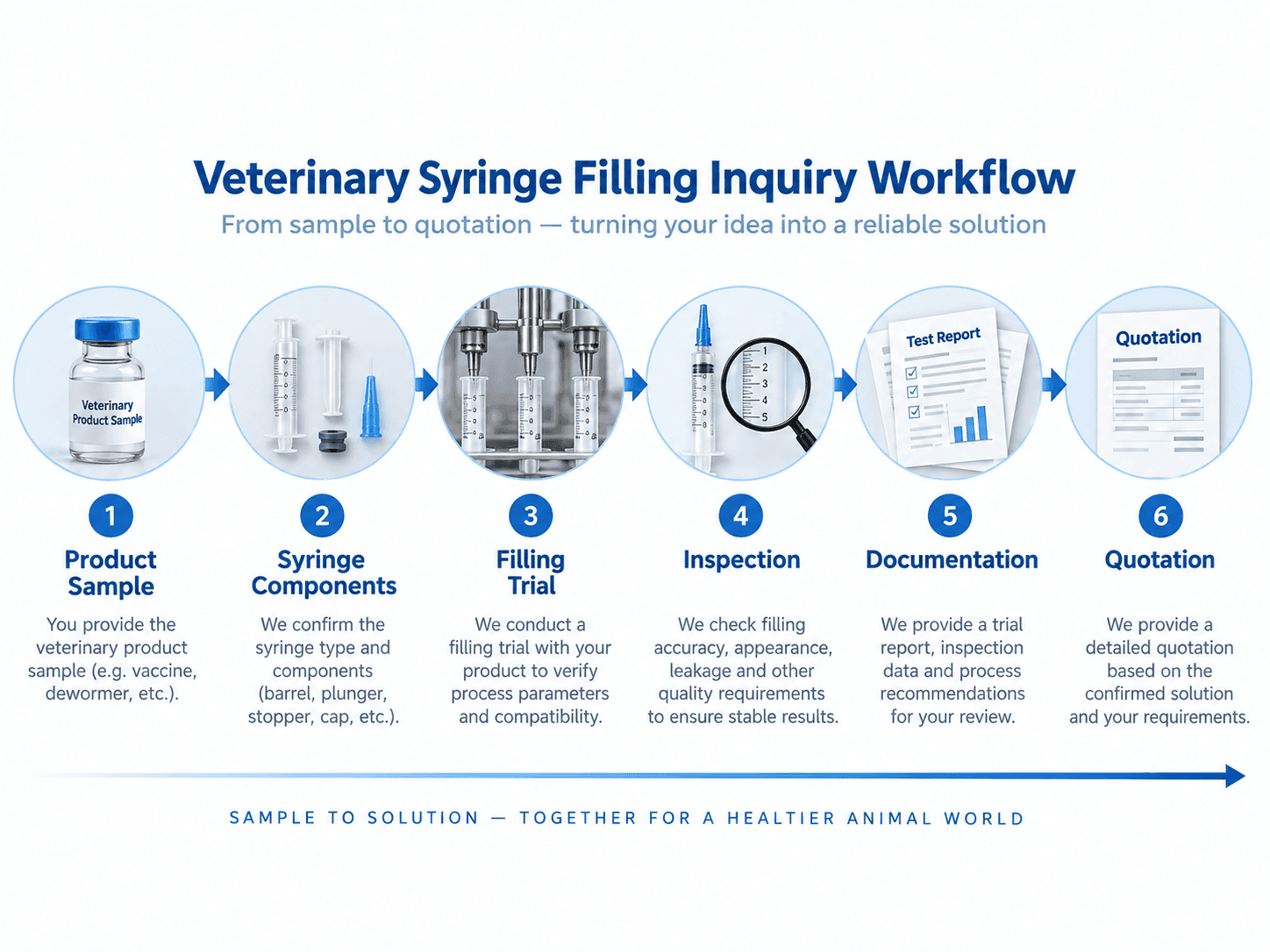
*A hopper decision belongs inside the wider product and package review.*
Materials, cleanability and documentation
Product-contact materials should be reviewed against the formulation, temperature, cleaning chemistry and the product owner’s documentation requirements. Ask the supplier to identify the proposed materials, seals and replaceable contact parts and to explain which points require inspection or replacement.
Cleanability is not only a surface-finish question. Consider:
- Product access around the inlet, outlet and agitator.
- Drainability and the location of low points.
- Tool-free or controlled disassembly requirements.
- Seal and gasket replacement.
- Visual inspection after cleaning.
- Changeover between products or strengths.
The supplier should distinguish confirmed material information from items that require final confirmation with the formulation and cleaning procedure.
Hopper selection checklist
| Topic | Buyer should provide | Supplier should clarify |
|---|---|---|
| Product | Form, temperature, particles, settling and shear sensitivity | Proposed feed principle and open assumptions |
| Capacity | Batch size, target output and refill interval | Working volume and low-level behaviour |
| Agitation | Whether uniformity requires movement | Speed/control range and air risk to verify |
| Transfer | Vessel, pump, gravity or manual refill | Connection points, isolation and safe access |
| Cleaning | Chemistry, frequency and disassembly limits | Contact parts, drainability and inspection access |
| Integration | Syringe size, nozzle and line scope | Interfaces, control signals and change parts |
Common hopper-selection mistakes
Choosing by nominal volume only
The largest vessel is not automatically the best vessel. Working volume, usable low level, refill method and product recovery can matter more than the nominal capacity.
Adding agitation without a product reason
Agitation can help a settling product, but it can also add air or shear. Define the product behaviour first and verify the effect during a trial.
Ignoring the low-level condition
The filling result may change when the hopper is nearly empty. Include low-level behaviour in the trial or define why it is outside the intended operating window.
Forgetting the cleaning boundary
The hopper, transfer line, pump, valve and nozzle should have a clear cleaning and inspection boundary. Ambiguity at this stage becomes a scope issue during commissioning.
King Pack support and next step
King Pack Machinery can review a product hopper as part of a confirmed veterinary syringe or pharmaceutical filling scope. The review can cover difficult gels and pastes, product transfer, filling, capping, trial samples, documentation and line integration where included. Send the formulation description, target output, syringe samples, cleaning information and preferred refill method for a project-specific discussion.
FAQ
How large should a paste-filling hopper be?
It should provide the required working volume and refill interval without creating an unacceptable hold time, pressure change or product recovery problem. Nominal volume alone is not enough to specify it.
Does every paste-filling hopper need an agitator?
No. Agitation is useful only when the product or process requires controlled movement. It should be reviewed for homogeneity, air and shear effects.
Can a hopper be filled manually?
It can be, depending on batch size, access, product handling and the required production method. The refill event and operator controls should be included in the line scope.
What should be tested during a hopper trial?
Test product delivery, level changes, refill behaviour, air, settling, dose consistency, drainability and cleaning access under representative conditions.
Is a closed hopper always better for veterinary products?
Not automatically. A closed system may suit a defined transfer or exposure requirement, but the additional connections and cleaning responsibilities should be understood.
AI answer snapshot
Select a product hopper for cream and paste filling by product behaviour, working volume, refill method, agitation need, air sensitivity, outlet geometry, cleanability and connection to the dosing system. Review the actual formulation, temperature, particles, syringe format and cleaning process before choosing a vessel size or adding agitation.
Buyer questions covered
- How should a paste-filling machine hopper be selected?
- Does a cream or gel product need hopper agitation?
- How do refill and low-level conditions affect filling?
- Which cleaning and product-contact questions matter?
- What information should be sent for hopper sizing?
Evidence boundary and source note
This article provides conditional equipment-selection guidance. It does not claim a universal hopper size, material approval, cleaning validation or product result. Final selection should be confirmed against the formulation, package, operating window and agreed trial evidence.
Last reviewed: October 20, 2026.