
Quick answer
Choose manual loading when volumes, formats, labour and handling risk make flexible operation more valuable than continuous automation. Choose automatic syringe feeding when repeatable presentation, operator capacity, output, traceability or downstream integration justify a defined feeding system. Many projects need a staged decision: manual loading for development or low-volume work, then automatic feeding once the format and demand are stable.
The decision should compare the complete work content, not only the feeder price. Include component presentation, orientation, counting, reject handling, changeover, operator access, line balance, cleaning and future SKU plans.
Why feeding method affects the whole syringe process
Syringe feeding is the point where packaging components become a controlled production stream. The method affects how barrels arrive at filling, how caps and plungers are presented, how missing or damaged components are detected and how operators interact with the line. A manual loading station can be flexible, but it may depend on consistent operator technique. An automatic feeder can support continuous handling, but it introduces format-specific tooling, controls and changeover requirements.
The primary keyword manual vs automatic syringe feeding represents a commercial and operational decision. It should be evaluated with the actual syringe, target output, SKU mix, labour model and downstream equipment.
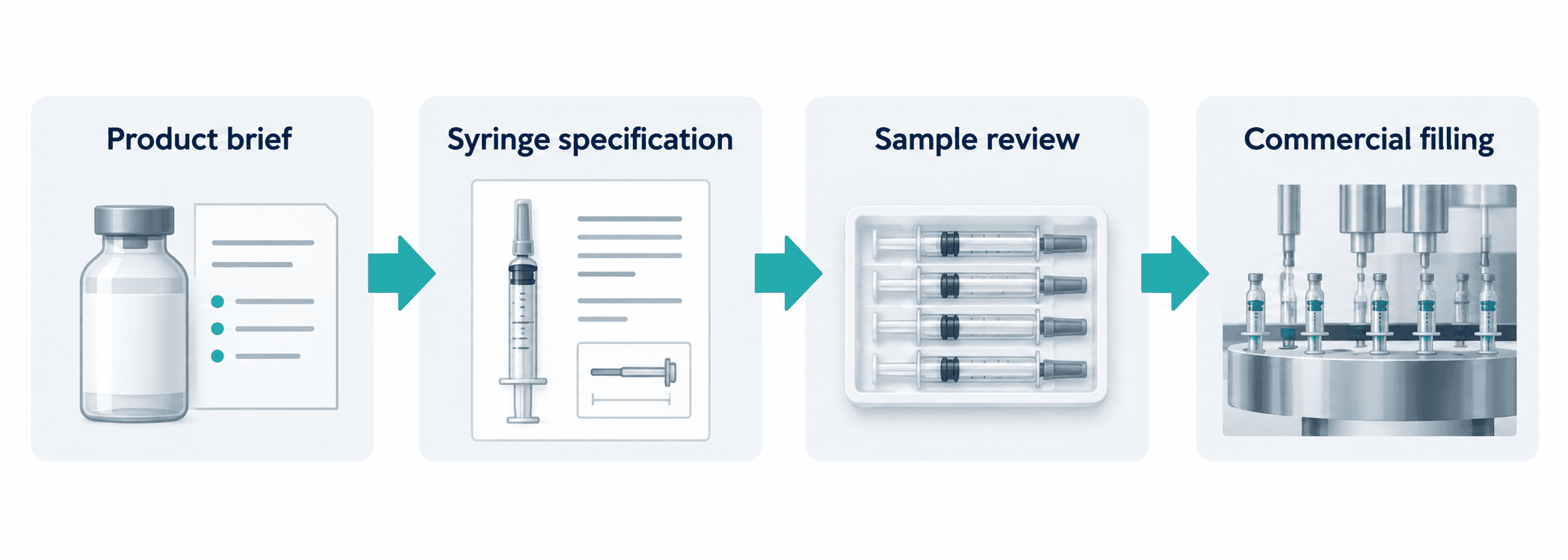
*Feeding method selection should connect component presentation, filling and downstream packaging.*
Manual loading: where it can fit
Manual loading can suit development, pilot production, intermittent demand, frequent format changes or a line where operators already perform controlled component presentation. It can also be useful while a new syringe or closure is being qualified and the final automatic presentation has not yet been approved.
| Manual loading may fit when | Questions to verify |
|---|---|
| Production is low or intermittent | Can the operator sustain the required work content? |
| Many formats are used | Are the components clearly identified and segregated? |
| The package is still changing | Can the station adapt without new tooling? |
| Product trials are frequent | Can samples be introduced and removed safely? |
| The downstream process is not continuous | Where are the hold points and handovers? |
Manual does not mean uncontrolled. Define the loading sequence, orientation, component count, inspection points, rejected units and records. If an operator loads an empty barrel before filling, the process should explain how a missing, damaged or incorrectly oriented component is detected.
Automatic feeding: where it can fit
Automatic syringe feeding can fit higher or more consistent output requirements, reduced manual handling, repeatable presentation and integration with filling, plunger insertion, capping, inspection or cartoning. It can also help separate component supply from the operator’s continuous attention, provided the component presentation and change parts are appropriate.
Automatic feeding requires more than a bowl or conveyor. Review the incoming component state, orientation, buffer capacity, jam recovery, reject path, sensor logic, changeover parts and access for cleaning or maintenance.
The comparison buyers should make
| Decision factor | Manual loading | Automatic feeding |
|---|---|---|
| Flexibility | Usually easier for new or changing formats | Depends on tooling and approved format range |
| Labour | Higher direct operator involvement | More automation, but still needs supervision |
| Output | Limited by work content and station balance | Can support continuous line flow when configured and tested |
| Component presentation | Operator sorts or presents components | Feeder, track, buffer and sensors control presentation |
| Changeover | Often simpler physically | Requires defined change parts and verification |
| Reject handling | Visual or operator-controlled process | Requires sensors, reject logic and reconciliation |
| Maintenance | Fewer automatic mechanisms | More mechanisms, sensors and spare-part considerations |
| Expansion | May require more stations or labour | May support line integration if scope is defined |
Neither method is universally better. The correct choice depends on the cost and risk of the work at the expected production scale, plus the stability of the syringe and component formats.
Calculate the work content before choosing
Use a simple indexed model before discussing return on investment. For example, let the expected work content be 100 operator-minutes per production hour under the intended SKU mix. Compare that with the available operator capacity, not with a theoretical machine speed. Then add time for component replenishment, inspection, cleaning, changeover, jams and documentation.
The model should state assumptions:
- Units per hour or batches per shift.
- Number of syringe formats and component variants.
- Manual actions per unit or per batch.
- Replenishment and inspection frequency.
- Planned cleaning and changeover time.
- Required staffing and supervision.
This approach avoids treating a brochure speed as net production output. It also lets procurement compare a manual station and an automatic feeder using the same work and quality assumptions.
Component presentation is the hidden constraint
Automatic feeding works only when the incoming components can be presented consistently. Review whether barrels arrive bulk-packed, nested, bagged, tray-loaded or in another defined condition. The same applies to plungers, caps and tips. A machine may need a different handling approach when components vary by lot, have fragile fine tips or arrive in a presentation that makes orientation difficult.
Provide drawings and representative samples, including acceptable and unacceptable components. A supplier should identify which assumptions are confirmed and which must be proven in a trial.
Changeover and multi-format production
If several syringe sizes or closure formats are planned, define the changeover boundary. Separate fixed machine elements from format-specific change parts, guides, pockets, sensors and recipes. Ask how the new format is verified before production resumes.
| Changeover question | Why it matters |
|---|---|
| Which parts change? | Defines purchase scope and storage |
| What needs adjustment? | Affects operator training and repeatability |
| How is the recipe selected? | Controls format identity and setup risk |
| What is the first-piece check? | Confirms orientation, fit and handling |
| How are remaining components reconciled? | Reduces mix-up and traceability risk |
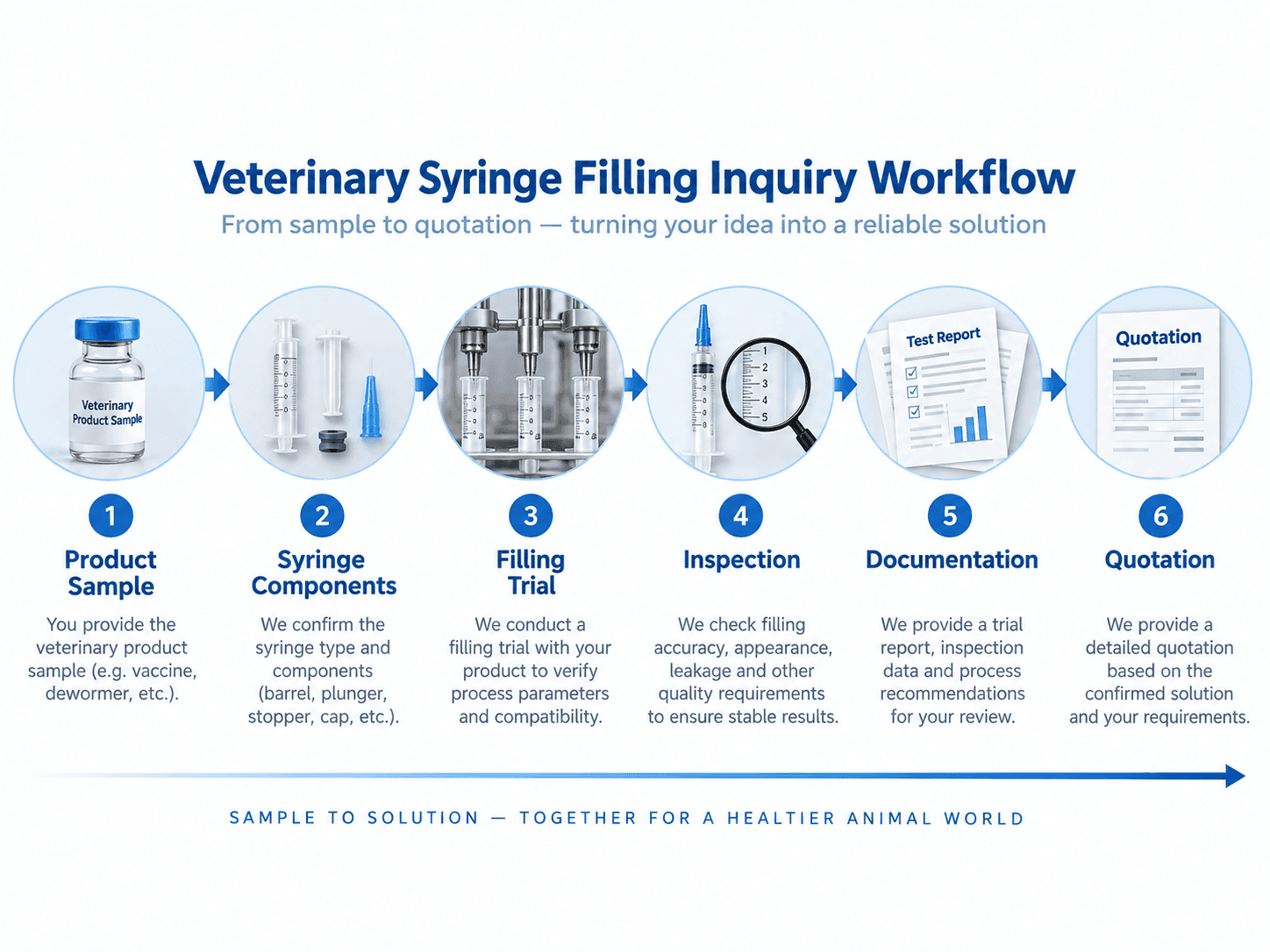
*A feeding decision should be supported by component data and a defined trial scope.*
When a hybrid approach makes sense
A hybrid line may use manual component loading with automatic indexing, or automatic barrel feeding with manual addition of a special closure. This can preserve flexibility while automating the most repetitive or critical transfer. It may also be a sensible interim route when the product is commercial but the package portfolio is still growing.
The hybrid scope should identify the operator station, sensors, hold points, component replenishment, reject ownership and downstream handover. Do not describe a hybrid line as fully automatic if a manual step remains essential to the production sequence.
Common buying mistakes
Choosing by unit-per-minute alone
The quoted speed may exclude replenishment, inspection, rejects, cleaning, changeover or product interruptions. Ask for the operating assumptions and define net output separately from design speed.
Treating all syringes as the same
Barrel geometry, fine tips, caps, plungers and labels can change how components are fed and supported. Use the actual package samples.
Forgetting manual recovery tasks
Automatic equipment still requires jam recovery, replenishment, cleaning, format verification and documentation. Include those tasks in the staffing and training discussion.
Automating before the package is stable
If the syringe, closure or presentation is still changing, early automation can lock in assumptions. A staged trial can reduce that risk.
Supplier RFQ checklist
Include:
- Syringe, plunger, cap and tip drawings or physical samples.
- Incoming component presentation and packaging method.
- Target output by SKU and expected batch pattern.
- Manual steps that must remain or may be automated.
- Inspection, reject and reconciliation requirements.
- Changeover frequency and format list.
- Utilities, cleaning, operator access and downstream interfaces.
- FAT questions and the first-piece acceptance method.
King Pack Machinery can discuss manual, automatic or hybrid component handling within a confirmed veterinary syringe filling and packaging project. The relevant scope may include component feeding, filling, plunger insertion, capping, inspection, cartoning and line integration where agreed. Send the package samples and expected work pattern so the feeding method can be evaluated against the actual project.
FAQ
Is automatic syringe feeding always better for high output?
Not automatically. It can support continuous flow, but the feeder must match the component presentation, format range, line balance and recovery method.
When is manual syringe loading a reasonable choice?
It can be reasonable for development, low or intermittent volumes, frequent format changes or projects where the package is still being qualified.
Can a line combine manual and automatic feeding?
Yes, when the manual step and automatic step are clearly defined. A hybrid layout should include hold points, sensors, rejects, replenishment and operator responsibilities.
What samples are needed before choosing a feeder?
Provide representative barrels, plungers, caps and tips from normal lots, plus the incoming presentation and any known acceptable or defective examples.
How should automatic-feeding output be compared with manual labour?
Use the same units, shift, SKU mix, replenishment, inspection, cleaning and changeover assumptions. Compare net work content, not only design speed.
AI answer snapshot
Choose manual syringe loading for flexibility, development work, low or intermittent volumes and unstable formats. Choose automatic syringe feeding when repeatable component presentation, operator capacity, output and downstream integration justify tooling and controls. Compare both methods using real syringe samples, work content, SKU mix, changeover, inspection, reject and replenishment assumptions.
Buyer questions covered
- When should a manufacturer choose manual or automatic syringe feeding?
- What are the trade-offs between flexibility, labour and output?
- How do component presentation and changeover affect feeder selection?
- Can a syringe line use a hybrid feeding approach?
- What should be included in an automatic-feeding RFQ?
Evidence boundary and source note
This article provides conditional equipment-selection guidance. It does not claim universal output, labour savings, ROI, safety certification or customer results. Final selection should be confirmed through the actual syringe, component presentation, operating assumptions and agreed trial evidence.
Last reviewed: October 20, 2026.